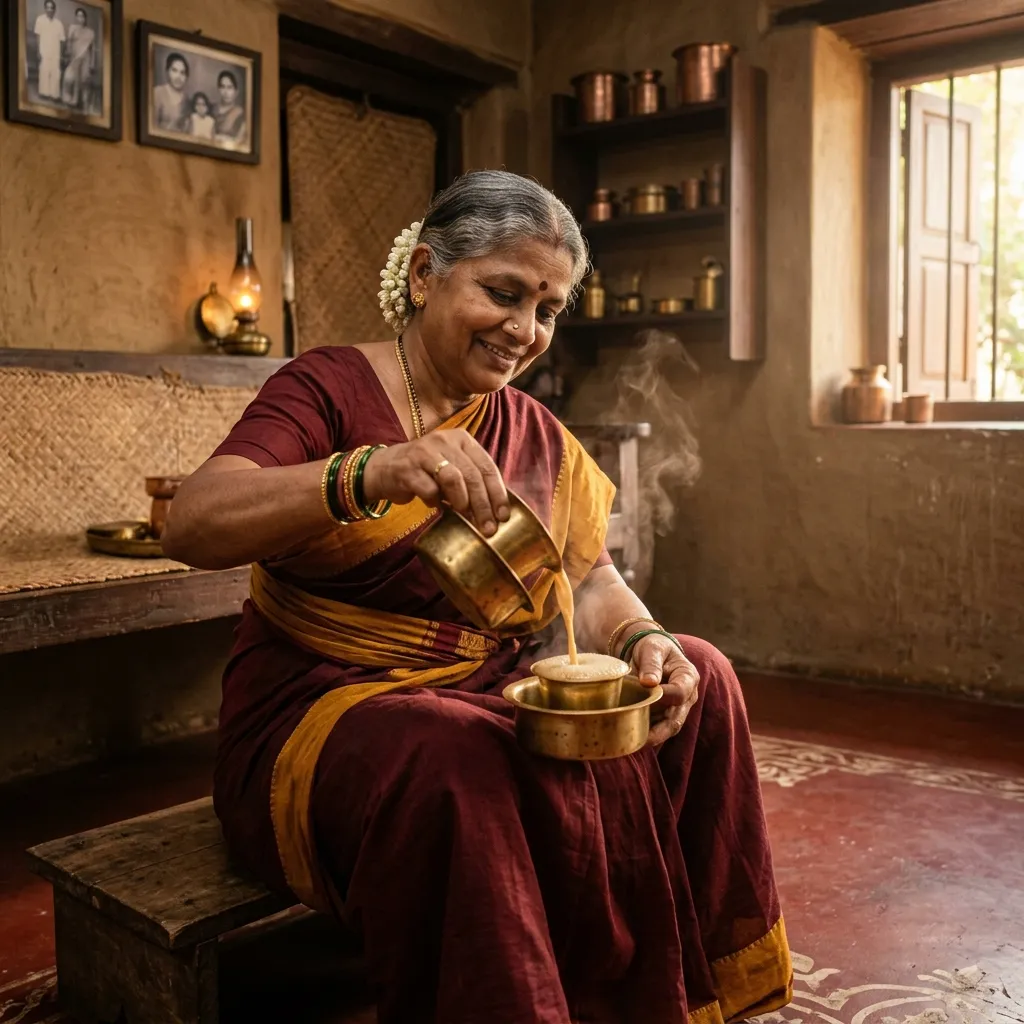
Traditional filter coffee

It Started with a Grandmother's Filter Coffee

Every morning, without fail, she would fill the brass filter with freshly ground coffee from the estate down the hill. The decoction would drip slowly — as if it knew there was no reason to rush. Mixed with hot milk and just enough jaggery, poured between the davara and tumbler until it was frothy and perfect.

"We grew up believing that's just what coffee was. Then we traveled the world and realized — nobody knew this coffee existed."

That's the frustration that birthed Kapi Today. The world's third-largest coffee producer, yet South Indian coffee remains invisible on the global stage. We decided to change that — not by adapting to the world's taste, but by bringing the world to ours.

Unapologetically authentic. No dilution. No westernization. Just real South Indian kapi, exactly as it was always meant to be — now delivered to your doorstep, anywhere on Earth.


Three Pillars. Zero Compromise.

Unapologetically Authentic
We don't soften our coffee for foreign palates. If it's filter coffee, it's brewed through brass with full decoction strength. If it's a dark roast, it's bold enough to stand up to milk and jaggery. This is how South India drinks coffee — and now, so can you.
Estate to Cup
Every bean is traceable to a specific family-run estate in the Western Ghats. No blending from anonymous commodity lots. We know the farmer, the altitude, the soil. We roast within 24 hours of your order. The freshest coffee you'll ever taste.
Culture, Not Just Coffee
Kapi Today isn't selling a beverage — we're sharing a culture. The davara-tumbler ritual, the morning filter ceremony, the red oxide veranda with brass everything. Every product we make carries a piece of South Indian heritage.


The Journey of Your Kapi

01
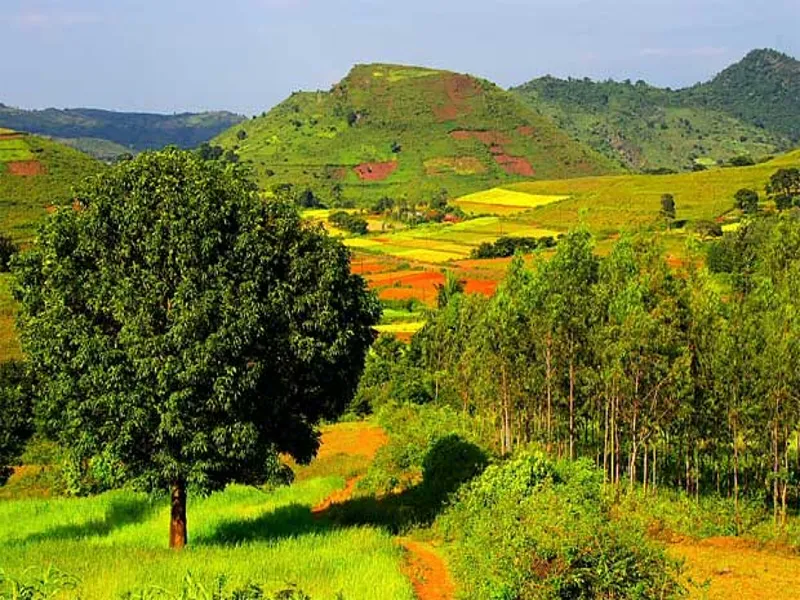
Shade-Grown in the Ghats
Coffee plants grow under the canopy of silver oak and pepper vines at 1,000–1,400m altitude in the Western Ghats.
02
Hand-Picked at Peak
Only ripe red cherries are hand-selected by experienced pickers during harvest season — December to March.
03
Sun-Dried on Red Oxide
Cherries are spread on traditional red oxide drying yards under the South Indian sun. Slow and natural.
04
Freshly Roasted to Order
We roast in small batches within 24 hours of your order. Light, medium, dark, or monsoon — crafted to the profile.
05
Filtered Through Brass
Packed fresh and shipped worldwide. We even include brew guides so you can make the perfect davara-tumbler pour at home.
06
In Your Cup, Worldwide
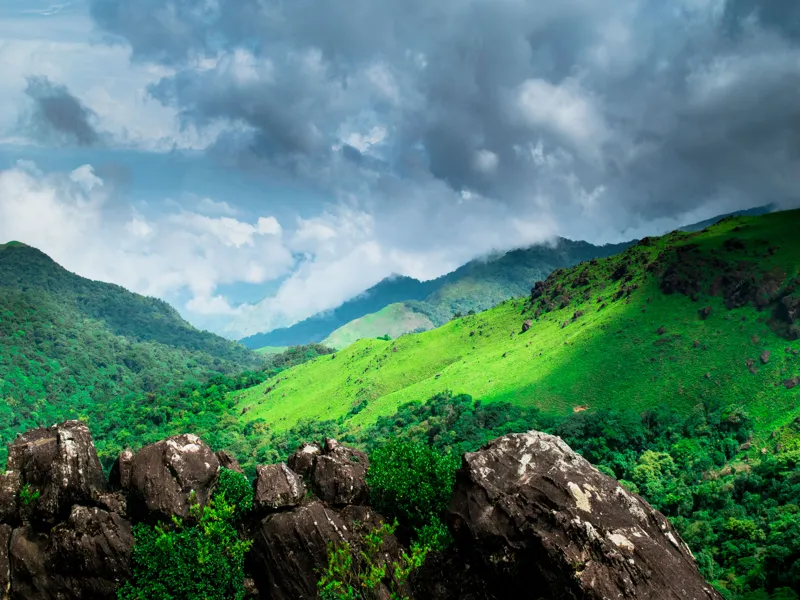
From the mist-covered slopes of the Western Ghats to 50+ countries. The same authentic kapi — wherever you call home.


Meet the Estates

Coorg Estate
Coorg
Karnataka
1,100m altitude
Heavy monsoon
Chocolate · Spice · Full Body
Chikmagalur Estate
Chikmagalur
Karnataka
1,400m altitude
Moderate rain
Fruity · Bright · Floral
Wayanad Estate
Wayanad
Kerala
900m altitude
Tropical wet
Cocoa · Walnut · Creamy
Nilgiris Estate
Nilgiris
Tamil Nadu
1,800m altitude
Cool & misty
Tea-like · Delicate · Citrus
Araku Valley Estate
Araku Valley
Andhra Pradesh
1,200m altitude
Tribal region
Berry · Sweet · Clean


Meet Our People

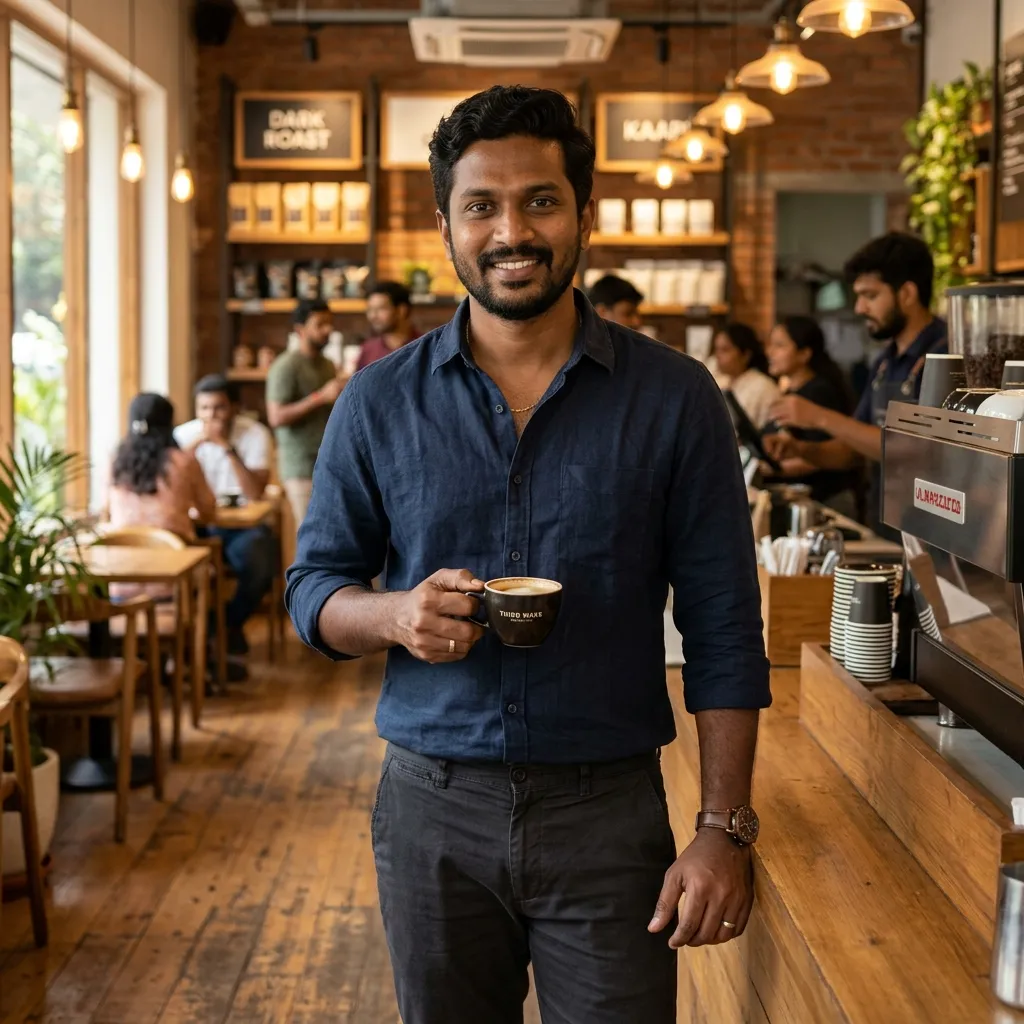
Arjun Menon
Arjun Menon
Founder
Born in Palakkad, raised on filter coffee. Spent a decade in London missing the taste of home. Started Kapi Today to make sure no South Indian abroad has to settle for bad coffee ever again.
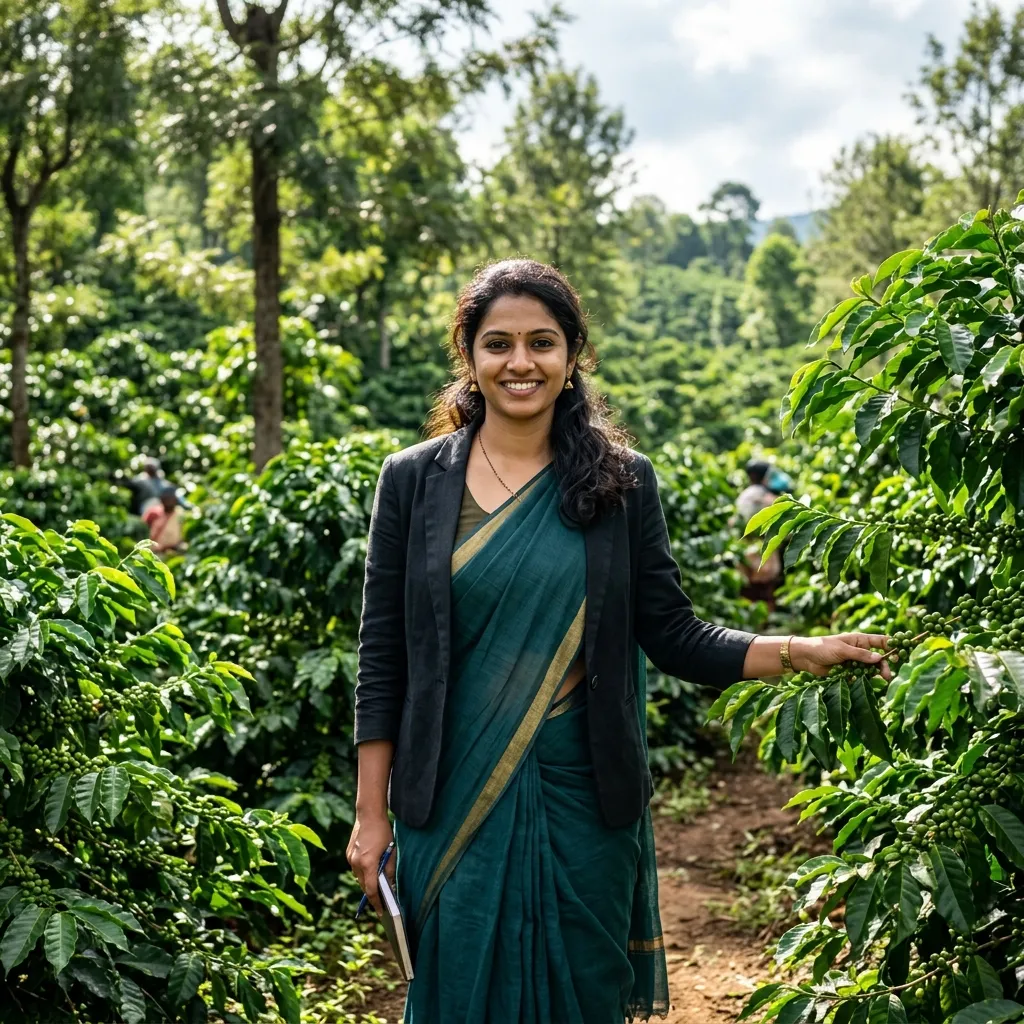
Kavitha Raj
Kavitha Raj
Head of Sourcing
Third-generation coffee planter from Coorg. Kavitha personally visits every partner estate, cups every batch, and ensures only the top 5% of each harvest makes it to Kapi Today.
Thomas Kurian
Thomas Kurian
Master Roaster
40 years of roasting experience. Thomas learned from his father in Chikmagalur and can tell the origin of a bean by smell alone. He oversees every single batch we roast.


We will never dilute our coffee, our culture, or our commitment to the land that grows it.

100% Estate Traceable
Roasted Within 24hrs
Fair Trade Direct

Every rupee you spend with Kapi Today goes directly to sustaining family-run estates, preserving shade-grown farming practices, and keeping alive a coffee culture that has existed for over 300 years.